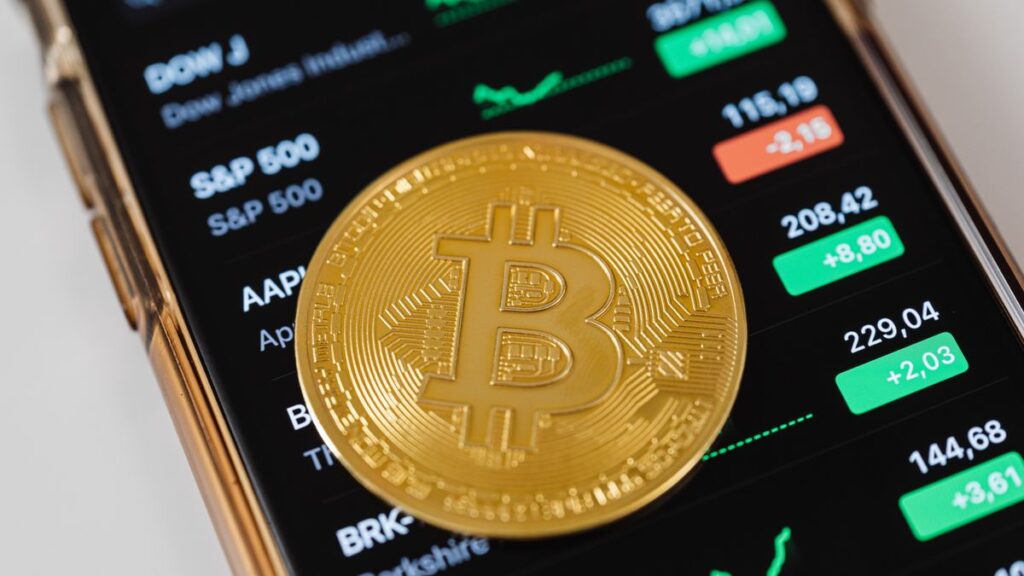
Crypto mining is the process by which proof-of-work networks validate transactions and mint new coins through competitive computation. Miners bundle pending transfers into blocks, search for a cryptographic hash below a network-defined target, and broadcast successful blocks to peers. The first valid block earns a reward, aligning economic incentives with honest ledger maintenance on chains such as Bitcoin (see /what-is-bitcoin-beginners-guide-/).
The Purpose of Mining in Blockchain Networks
Decentralized networks lack a central clerk to order transactions. Mining provides a lottery-like mechanism to propose the next block fairly proportional to hashpower contributed, within protocol rules. Nodes independently verify blocks, rejecting invalid transactions or incorrect proofs.
Mining also introduces new currency according to emission schedules. On Bitcoin, block subsidies halve on a predictable cadence until fees dominate miner revenue. This monetary policy is coded, not discretionary.
Proof of Work in Plain Language
Proof of work requires expending real-world resources—electricity and hardware—to produce a block header hash with enough leading zeros. Adjusting the target difficulty keeps average block intervals stable as total network hashpower fluctuates. The work is easy to verify but hard to produce, asymmetry that secures the chain.
What Miners Actually Do
Miners collect unconfirmed transactions from the mempool, prioritizing those paying higher fees per byte. They construct a candidate block including a coinbase transaction paying themselves the subsidy plus fees. Then they vary a nonce field and sometimes extranonce data, hashing repeatedly until meeting the target or receiving updated work.
Pool operators coordinate many small miners, distributing rewards proportional to shares submitted. Solo mining remains possible but variance is high unless hashpower is enormous.
Mining Hardware Evolution
CPU mining gave way to GPUs, then FPGAs, then application-specific integrated circuits optimized for SHA-256 or other algorithms. ASICs dominate Bitcoin mining economics, concentrating operations where electricity is cheap and climates aid cooling. Algorithms marketed as ASIC-resistant periodically face new specialized hardware anyway.
Energy, Economics, and Location
Mining profitability depends on electricity price, hardware efficiency, coin price, difficulty, and pool fees. Operators seek stranded energy, hydro sites, and negotiated industrial rates. Public debates focus on carbon intensity; some facilities use renewable or flared-gas sources, while critics highlight overall consumption scale.
Difficulty adjustments make mining self-regulating. When prices rise, more machines join, raising difficulty until margins compress. When unprofitable miners shut off, difficulty falls, restoring equilibrium for survivors.
Halvings and Fee Markets
Subsidy halvings reduce new coin issuance, shifting miner reliance toward transaction fees over time. Fee spikes during congestion can compensate temporarily, but low-fee environments pressure less efficient operators to exit.
Alternatives to Traditional Mining for Users
Most investors do not mine; they purchase coins on exchanges. Cloud mining contracts historically attracted scams; diligence is essential if exploring hosted hashpower. Staking on proof-of-stake networks replaces mining’s role on those chains with collateralized validation instead of hashing races.
Mining centralization risks include pool collusion and geographic concentration, though economic incentives generally punish attacks that destroy coin value miners earn.
Merged Mining and Auxiliary Chains
Some projects allow merged mining where work on a parent chain simultaneously secures a child chain. This recycles hashpower but ties security assumptions together. Understanding these relationships matters when evaluating smaller networks bootstrapped on larger ones.
Environmental and Policy Context
Regulators scrutinize mining facilities for energy reporting, noise, and grid impacts. Some jurisdictions ban or restrict mining; others invite data centers as economic development. Miners respond by migrating equipment across borders, making policy a moving variable in global hash distribution.

Proof-of-stake adoption elsewhere does not eliminate Bitcoin mining’s proof-of-work model without a contentious hard fork social consensus unlikely to converge quickly.
Home Mining Realities
Residential mining faces noise, heat, electricity costs, and HOA or lease restrictions. Hobbyists may mine altcoins with GPUs primarily to learn rather than profit. Honest accounting includes hardware depreciation and cooling needs.
Security Implications of Hashpower
A entity controlling majority hashpower could censor transactions or attempt double spends, though sustained attacks are costly and detectable. Community coordination could change proof-of-work rules or accept an alternate chain, imposing social limits on pure hashpower attacks.
Confirmation depth remains user guidance: more blocks atop a transaction make reversal exponentially unlikely under honest majority assumptions.
Mining Pools and Reward Distribution
Pools aggregate hashpower from many participants, paying out proportional shares using schemes such as pay-per-share or full pay-per-share to smooth variance. Pool operators charge fees and must be trusted to distribute rewards honestly, though transparent dashboards and switching costs limit blatant theft. Miners configure stratum connections from ASIC farms or GPU rigs to chosen pools.
Decentralization advocates monitor pool concentration because a dominant pool could theoretically withhold blocks or collaborate on attacks, even if economic incentives discourage sustained abuse. Protocol improvements and better payout transparency aim to keep pool share below concerning thresholds.
Block Template Construction and Transaction Selection
Miners ordering transactions can prioritize higher fees, implement replace-by-fee policies, and occasionally include proprietary transactions. This ordering power resembles maximal extractable value dynamics later prominent on smart-contract chains. Users paying low fees during congestion may wait longer for inclusion regardless of global mempool size.
From Hobby Mining to Industrial Operations
Industrial sites negotiate power purchase agreements, optimize cooling, and maintain spare parts inventories. Noise and heat make residential mining difficult at scale. Some regions offer tax incentives for data centers, changing global hash distribution as policies shift.
Retail miners should calculate break-even electricity rates using online calculators, inputting accurate wattage and pool fees. Mining altcoins with GPUs may teach technical skills even when profit is elusive, but treat equipment purchases as educational expenses unless math clearly supports returns.
Future of Mining in a Diversified Industry
Bitcoin mining likely remains proof-of-work barring overwhelming social consensus to change consensus rules. Other chains migrated to proof of stake, reducing GPU demand in those ecosystems. Mining hardware resale values collapse when algorithms change or prices fall, adding depreciation risk beyond electricity alone.
The Economics of Crypto Mining
Mining profitability depends on three main variables: the price of the cryptocurrency being mined, the electricity cost in your location, and network difficulty. Rising prices attract more miners, which increases difficulty and reduces individual rewards. Falling prices push high-cost miners out of business until equilibrium returns. Understanding this dynamic helps explain why mining companies cluster in regions with cheap electricity.
Hardware costs matter too. Application-specific integrated circuits (ASICs) designed for Bitcoin mining cost thousands of dollars and become obsolete every few years as more efficient models launch. Calculating return on investment requires honest projections about future prices, difficulty growth, and equipment depreciation.
Solo Mining vs Mining Pools
Solo mining means running your equipment independently and collecting full rewards when you find a block. Modern Bitcoin mining difficulty makes solo mining impractical for individual operators — you might mine for years without earning anything. Mining pools combine the hash power of many participants, distribute work, and share rewards proportionally based on contributed computing power.
Pool fees typically range from 1-3% and pool operators provide infrastructure, payout management, and reliability. Choose pools with transparent operations, proven track records, and reasonable fees. Geographically distributed pools also reduce latency for miners in different regions.
Environmental Considerations in Mining
Proof-of-work mining consumes significant electricity, drawing both criticism and innovation. Many mining operations now use stranded renewable energy — power that would otherwise be wasted because it cannot be transmitted to consumers. Hydro-rich regions, geothermal areas, and locations with excess solar or wind power host an increasing share of global mining capacity.
Some miners participate in grid balancing services, ramping operations up or down based on energy demand. This provides flexibility to electrical grids and can actually improve renewable energy economics. The narrative around mining and the environment is more nuanced than headlines often suggest.
Conclusion
Crypto mining secures proof-of-work blockchains by transforming electricity and specialized hardware into probabilistic block production rights, rewarding valid work with subsidies and fees. Difficulty adjustment, pool economics, and hardware evolution shape who mines profitably and where facilities locate. Whether you participate as an operator or simply hold assets secured by others’ work, understanding mining clarifies issuance, fee dynamics, and the security model underpinning major networks.