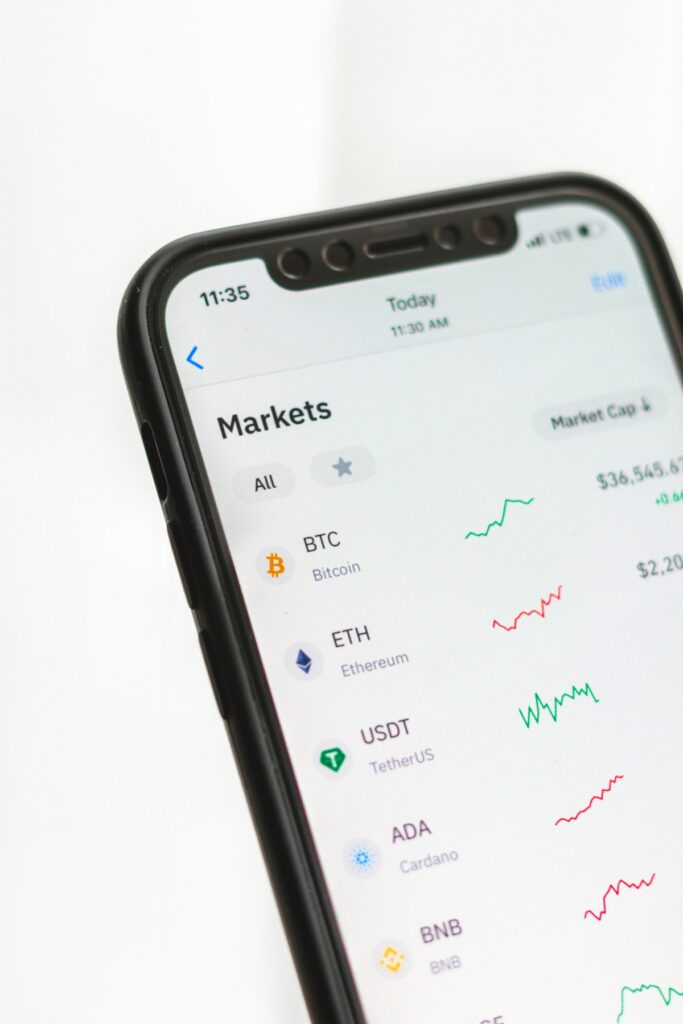
Bitcoin vs Ethereum is the most common question newcomers ask when entering cryptocurrency. Both are top-two assets by market capitalization, both have spot ETFs trading on major exchanges, and both have passionate communities — yet they serve fundamentally different purposes. Choosing between BTC and ETH (or deciding to hold both) depends on your goals, risk tolerance, and investment timeline.
This guide breaks down the Bitcoin vs Ethereum debate across technology, economics, real-world utility, and 2026 market dynamics so you can make an informed decision rather than following hype or social media sentiment.
Bitcoin and Ethereum: Two Different Visions
Bitcoin was designed as peer-to-peer digital money — a decentralized store of value with a fixed supply cap of 21 million coins. Its architecture prioritizes security and simplicity. Bitcoin does not support smart contracts natively, and its proof-of-work consensus, while energy-intensive, has proven remarkably resilient over 15+ years of continuous operation.
Ethereum, launched in 2015 by Vitalik Buterin and co-founders, was built as a programmable blockchain. Beyond transferring value, Ethereum enables smart contracts — self-executing code that powers decentralized applications (dApps), DeFi protocols, NFTs, stablecoins, and tokenized real-world assets. Think of Bitcoin as digital gold and Ethereum as digital infrastructure.
These distinct designs lead to different investment theses. Bitcoin investors bet on scarcity and monetary premium. Ethereum investors bet on network utility, developer activity, and the growth of on-chain finance.
Technology Comparison: Proof of Work vs Proof of Stake
Bitcoin uses proof-of-work (PoW), where miners expend computational energy to validate transactions and secure the network. Mining difficulty adjusts automatically, and the 2024 halving reduced new BTC issuance to 3.125 coins per block. PoW’s energy consumption is a frequent criticism, though a growing share of Bitcoin mining now uses renewable energy sources.
Ethereum completed “The Merge” in 2022, transitioning from PoW to proof-of-stake (PoS). Validators stake ETH to secure the network and earn rewards — currently around 2.8-3.5% annual percentage yield (APY) as of 2026. PoS reduced Ethereum’s energy consumption by over 99% and introduced native yield that Bitcoin lacks at the protocol level.
Ethereum’s ongoing roadmap includes upgrades like Pectra, which raised the maximum validator balance to 2,048 ETH, improving capital efficiency for large stakers. Layer 2 networks (Arbitrum, Optimism, Base) process transactions off the main chain, dramatically reducing fees while inheriting Ethereum’s security.
Supply Economics: Fixed Cap vs Programmatic Issuance
Bitcoin’s 21 million supply cap is its defining economic feature. With over 90% of all BTC already mined, scarcity narratives drive much of Bitcoin’s investment appeal. Halving events every four years reduce new supply, historically correlating with bull market cycles.
Ethereum does not have a hard cap. However, since EIP-1559 (2021) and The Merge, ETH can become deflationary during periods of high network activity — transaction fees are partially burned, offsetting new issuance from staking rewards. Total ETH supply has fluctuated around 120 million, with net issuance depending on usage.
For investors, this means Bitcoin offers predictable scarcity while Ethereum offers utility-driven demand with dynamic supply mechanics.
Use Cases: Store of Value vs Smart Contract Platform
Bitcoin’s primary use cases in 2026 include long-term savings, portfolio diversification, cross-border value transfer, and institutional treasury allocation. The Lightning Network enables faster micropayments, but Bitcoin’s core identity remains a store of value rather than an application platform.
Ethereum powers the vast majority of decentralized finance. Lending protocols (Aave, Compound), decentralized exchanges (Uniswap), stablecoins (USDC, USDT on-chain settlement), liquid staking (Lido, Rocket Pool), and restaking (EigenLayer) all run on Ethereum. Developer activity, total value locked (TVL), and daily active addresses consistently rank Ethereum first among smart contract platforms.
If you want exposure to the growth of on-chain finance, Ethereum provides direct participation. If you want a simpler monetary asset with a clear scarcity narrative, Bitcoin is the more straightforward choice.
ETFs and Institutional Access in 2026
Spot Bitcoin ETFs launched in the United States in January 2024, opening the floodgates for institutional and retail investment through traditional brokerage accounts. By 2026, Bitcoin ETFs hold hundreds of billions of dollars in assets under management, making BTC accessible without self-custody.

Spot Ethereum ETFs followed, with several issuers now distributing staking rewards to ETF holders — a significant development that bridges traditional finance with on-chain yield. This institutional wrapper lowers the barrier to entry but means you do not directly hold ETH or participate in DeFi.
Both assets benefit from ETF adoption, though Bitcoin retains the first-mover advantage in institutional mindshare and regulatory familiarity.
Performance and Volatility Considerations
Historically, Ethereum has outperformed Bitcoin during crypto bull markets but fallen harder during bear markets. The ETH/BTC ratio is a closely watched metric — when it rises, Ethereum is gaining relative strength; when it falls, capital rotates toward Bitcoin as a safer crypto asset.
Both assets are volatile compared to stocks or bonds. Bitcoin’s larger market cap provides slightly more stability, while Ethereum’s utility exposure creates additional catalysts (upgrades, DeFi growth, L2 adoption) that can drive outperformance or underperformance.
Past performance does not guarantee future results. Evaluate both assets based on fundamentals rather than recent price action alone.
Portfolio Allocation: BTC, ETH, or Both?
Many financial advisors and crypto strategists recommend holding both Bitcoin and Ethereum as core portfolio positions. A common framework allocates a larger share to Bitcoin (60-70%) for stability and scarcity, with Ethereum (30-40%) providing utility exposure and staking yield.
Conservative investors may overweight Bitcoin. Growth-oriented investors comfortable with smart contract risk may overweight Ethereum. DeFi-active users often hold ETH for gas fees and protocol interaction while keeping BTC as long-term savings.
Your allocation should reflect your understanding of each asset, time horizon, and willingness to endure volatility. Dollar-cost averaging into both over months or years reduces timing risk compared to lump-sum purchases.
Risks to Consider for Each Asset
Bitcoin risks: Regulatory restrictions, competition from CBDCs and stablecoins as payment rails, environmental criticism of PoW, and correlation with risk assets during macro downturns.
Ethereum risks: Smart contract vulnerabilities, competition from Solana and other L1 chains, complexity of the roadmap, MEV and centralization concerns in staking, and regulatory uncertainty around securities classification.
Neither asset is risk-free. Conduct thorough research, use secure storage, and never invest more than you can afford to lose.
Conclusion: Making Your Choice
The Bitcoin vs Ethereum question does not have a universal answer. Bitcoin is the simpler, scarcer, more established monetary asset. Ethereum is the programmable backbone of decentralized finance with native yield and a vibrant developer ecosystem. For most long-term crypto investors, holding both captures complementary exposures — monetary premium from BTC and utility premium from ETH.
Start by defining your goals: Are you saving for the long term, earning yield, or building on-chain? Your answer will point you toward the right allocation. Continue learning with guides on what Bitcoin is, Ethereum staking, and decentralized finance to deepen your understanding of both ecosystems.
Additional Resources to Continue Learning
Crypto moves quickly, and staying current matters as much as understanding fundamentals. Bookmark a few reliable resources and check them periodically: official protocol documentation, reputable independent research blogs, on-chain analytics platforms, and community forums where developers and long-term users discuss real issues. Avoid sources that rely on hype, vague promises, or pressure tactics — those are red flags regardless of how polished the presentation looks.
Build the habit of reading primary sources rather than relying on summaries alone. A protocol’s whitepaper, GitHub repository, and governance forum reveal far more about its trajectory than any third-party article. When a project announces an upgrade or controversy, going straight to the source helps you form your own view instead of inheriting someone else’s framing.
Final Thoughts
Every concept covered here interconnects with the broader crypto landscape. As you continue exploring, you will notice the same fundamentals reappearing in new contexts — different blockchains, different consensus models, different financial primitives all building on shared ideas. Patience and steady learning compound dramatically over months and years.
Take what you learned here, apply it carefully with small amounts first, and stay skeptical of anyone promising guaranteed outcomes. The most successful crypto participants combine technical understanding with disciplined risk management — both habits worth developing regardless of where the market moves next.